
The repeat damp repair is the repair that costs you twice

The law changes timescales, not building physics
Awaab’s Law starts the clock. It does not stop water.
From 27 October 2025, social landlords in England must address emergency hazards within 24 hours, investigate significant damp and mould hazards within 10 working days, provide a written summary of findings within 3 working days of the investigation concluding, and begin relevant safety or preventative works within 5 working days, subject to the rules in the guidance.
That is a legal timetable. It is not a diagnosis.
The lifestyle assumption is finished
One of the most important lines in the government guidance is also one of the simplest: it is unacceptable for social landlords to assume that damp and mould are caused by a tenant’s “lifestyle” and then fail to investigate on that basis. Everyday moisture from cooking, bathing and drying clothes is normal. The question is whether the building is coping with that moisture or trapping it.
If your default response is still a mould wash plus a conversation about window opening, you are not just taking a technical shortcut. You are taking a governance shortcut as well.

Repeat repairs are usually a diagnostic failure
When the same property gets another clean, another redecorate and then another complaint, the wall is telling you that the source was never properly isolated.
RICS points owners and professionals back to the usual suspects: gutters, rainwater pipes, pointing, render, raised ground levels, blocked cavities, vents, plumbing leaks and other fabric defects. Its building-pathology guidance also notes that badly installed cavity insulation can slump, block vents and contribute to cold bridging, condensation, mould growth and damp.
Why the risk rises as the problem spreads
HHSRS guidance treats damp and mould growth as a housing hazard and says that where dampness appears across several rooms, the wider spread increases the likelihood that harm could be caused. The same guidance links damp and mould growth to breathing difficulties, asthma, rhinitis, depression and anxiety.
The process landlords need now
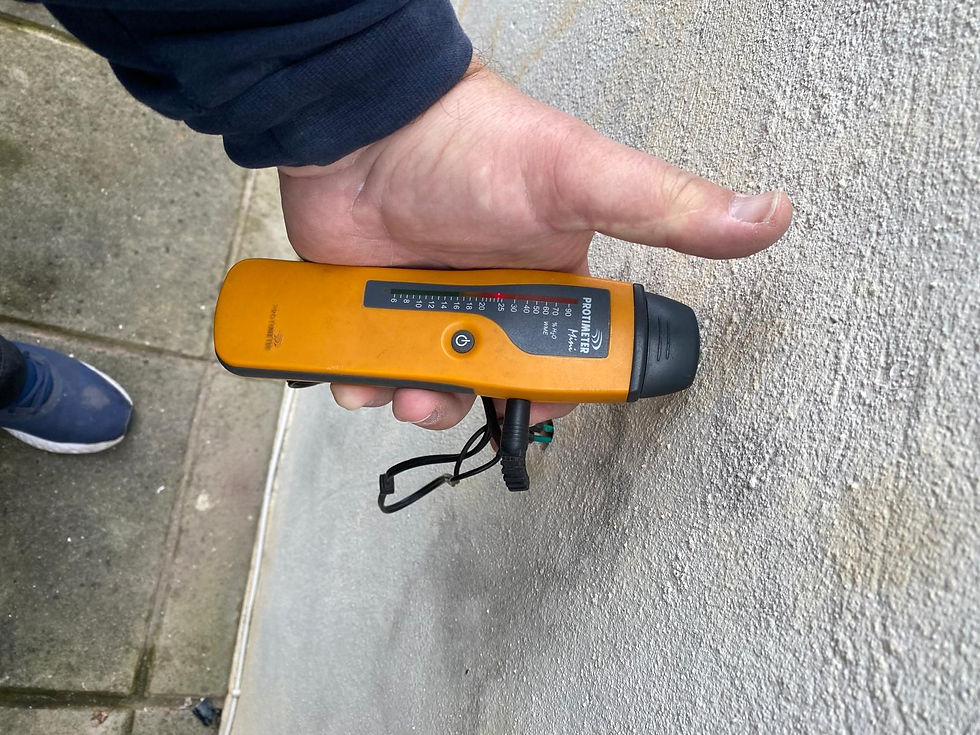
The better model is fabric-first and evidence-first: triage the report properly, record tenant vulnerabilities, inspect the building, make the immediate hazard safe, and then start the preventative works that stop recurrence.
That matters operationally too, because Awaab’s Law guidance makes clear that warranty arrangements and contractor structures do not remove the landlord’s responsibility to comply with the requirements. The landlord still owns the outcome.
A fast response is necessary. A fast misdiagnosis is expensive. The repeat damp repair is the repair that costs you twice: once when you send the first team out, and again when you discover the cavity was still bridged, the wall was still wet, or the external defect was never corrected.
If you are still closing damp cases with surface treatment alone, you are not reducing risk. You are deferring it.
About the author
Damian Mercer is Director of Cavity Extraction Ltd, a specialist contractor focused on failed cavity wall insulation, damp, mould and related building-fabric defects. Public records show Damian as the company’s active director, while the business is publicly listed on TrustMark and presented on its own site as a specialist in cavity extraction, thermal imaging and remedial advice.
Damian also appears in industry media discussing the wider impact of failed cavity wall insulation. He writes practical guidance for homeowners, landlords and housing professionals who need clear, evidence-led advice on moisture, retrofit and property condition issues.


Comments