
A survey can suspect the defect, but it cannot see through brickwork

“Further investigation” is not indecision
When a survey says further investigation recommended, sellers hear delay, buyers hear cost, and landlords hear another piece of admin.
Usually, it means the surveyor is doing the right thing.
RICS notes that retrofitted cavity wall insulation is often installed incorrectly and may slump, block vents or create damp. It also says such issues can be difficult to diagnose without invasive investigation, and that a surveyor may recommend invasive investigation where the cavity is the likely cause of an internal defect.
A good survey should identify risk. It should not pretend to have X-rayed the wall.
What hidden cavity defects change the picture
Once the conversation moves beyond what can be seen from the room, the list of possible defects gets longer very quickly: defective or saturated insulation, rubble bridging the cavity, blocked vents, local rain ingress, cold bridging and, on some properties, wall tie corrosion and concerns.
That last point matters. Cavity Extraction ltd remedial wall tie guidance notes that older metal ties can corrode after 15 to 20 years and that damp and flooding can accelerate the process (especially in coastal areas dew to salt air). If the same elevation is also showing horizontal cracking, the wall tie conversation belongs in the same room as the insulation conversation.
The clues that should escalate the recommendation
If a damp patch sits on an exposed elevation, if the wall feels markedly colder than the room, if there is a history of cavity fill, or if visible cracking suggests movement in the outer leaf, the next step should be evidence, not optimism.
Approved Document C already treats cavity insulation suitability as a matter of wall construction and exposure to driving rain. It includes a UK exposure map and a table of maximum recommended exposure zones for insulated cavity masonry walls. That is a useful reminder that “insulated somewhere before” is not the same as “suitable now”.
What a sensible next instruction looks like
The better sequence is usually straightforward. Review the survey findings. Inspect the outside fabric. Consider the exposure. Then use the right tools to see inside the wall.
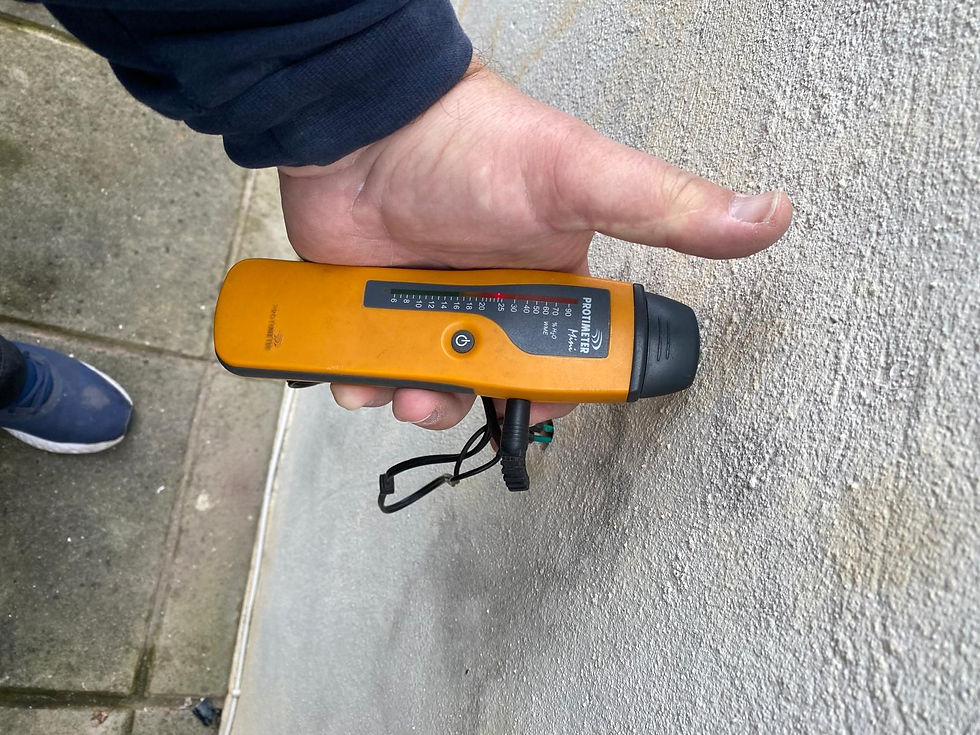
Cavity Extraction Ltd.’s live service pages already support that route with cavity wall insulation removal, borescope investigation, thermal imaging, damp testing, and remedial wall ties under one roof. That is useful for surveyors, buyers and landlords alike because it turns a vague concern into a scoped technical next step.
A survey can suspect the defect. It cannot see through brickwork. If your report mentions damp, failed cavity fill, cold bridging or wall tie concern, the next instruction should not be guesswork. It should be a cavity investigation.
About the author
Damian Mercer is Director of Cavity Extraction Ltd, a specialist contractor focused on failed cavity wall insulation, damp, mould and related building-fabric defects. Public records show Damian as the company’s active director, while the business is publicly listed on TrustMark and presented on its own site as a specialist in cavity extraction, thermal imaging and remedial advice.
Damian also appears in industry media discussing the wider impact of failed cavity wall insulation. He writes practical guidance for homeowners, landlords and housing professionals who need clear, evidence-led advice on moisture, retrofit and property condition issues.


Comments